
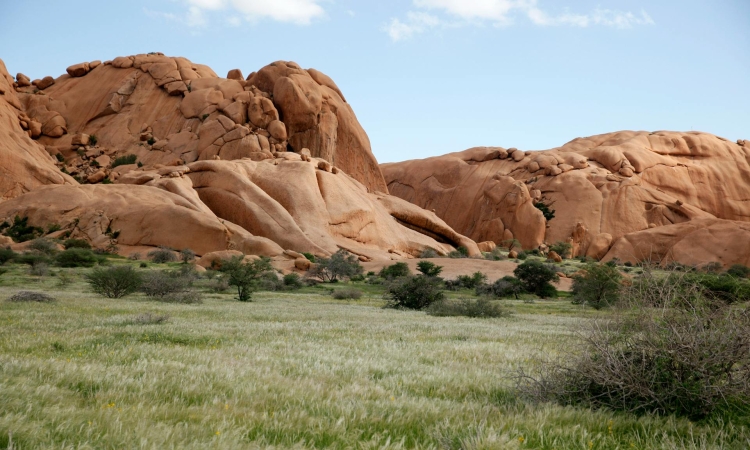
The biodiversity, ecosystem & geography of Spitzkoppe make this area one of the most interesting natural sites in Namibia. Spitzkoppe is located in the Namib Desert and is made up of ancient granite inselbergs that rise sharply from flat desert plains. These rock formations are more than 120 million years old and were formed when volcanic magma pushed toward the surface and was later exposed by erosion.
Spitzkoppe lies in central Namibia between Usakos and Swakopmund. The geography of the area is defined by bare granite peaks, smaller domes, rocky slopes, and wide open plains. These inselbergs create small protected areas that support plant and animal life in an otherwise harsh desert environment.
The ecosystem of Spitzkoppe is shaped by very low rainfall, high temperatures, and frequent fog moving inland from the Atlantic Ocean. Rainfall is rare, but when it occurs it can strongly affect soil and plant growth. Fog and moisture from the air play an important role in supporting life, especially lichens and small plants that grow on rock surfaces.
Spitzkoppe sits at the meeting point of three major biomes: the Nama Karoo, the Savannah, and the Desert. Because of this, the area supports a mix of plant species. Lichens and succulents are common on rocks, while grasses and shrubs grow in cracks, valleys, and along the lower slopes. Some plants release acids that slowly break down rock surfaces and create a dark coating often called desert varnish.
Wildlife in Spitzkoppe includes animals that are adapted to dry conditions. Klipspringer are often seen moving across steep rocks. Smaller mammals such as mongooses and squirrels live among the stones and shrubs. Reptiles are also present, as the wider Namib region supports many reptile species. Birds are common around the rocks and open plains, using the inselbergs as nesting and resting sites.
The special microhabitats created by the granite peaks help protect species and support biodiversity. Basic camping facilities allow visitors to experience this environment. Because of its ecological value, the biodiversity, ecosystem & geography of Spitzkoppe are important for conservation planning. Local communities are working toward sustainable land use that balances tourism and environmental protection.


