
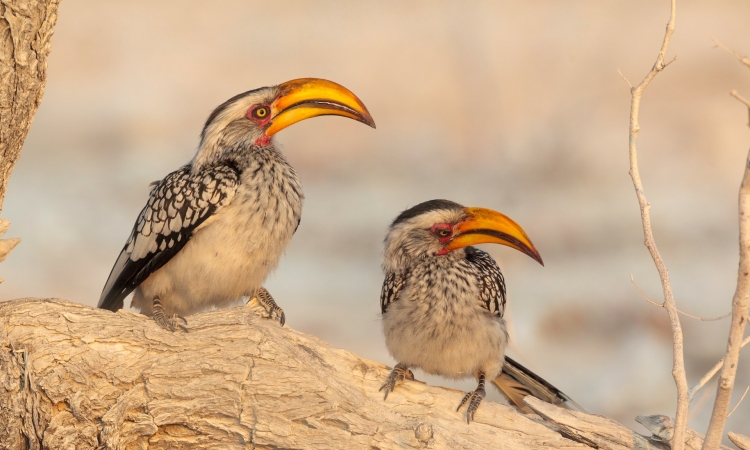
Birds in Spitzkoppe are an important part of the desert ecosystem and attract bird lovers from around the world. Spitzkoppe is known for its wide plains, dry desert land, and red granite rocks. These features create good habitats for bird species that are adapted to dry conditions.
One of the most special birds found in Spitzkoppe is the Herero Chat. This bird is closely linked to rocky desert areas and is often searched for by visiting birders. Even though it is present, it can be difficult to spot and may take several days of careful observation.
More visible species include the White tailed Shrike. This bird is easier to see and is known for its clear markings, including a dark mask and bright eye. It is often seen perched on bushes or rocks while watching for insects. Another bird commonly found in the area is the Pririt Batis, which shares similar colors with the shrike and can be seen moving actively among trees and shrubs.
The Dusky Sunbird is also found in Spitzkoppe, especially in places where a few trees grow near the base of the granite rocks. In low light, this bird appears almost black. When sunlight reaches its feathers, the color changes and becomes easier to notice. This bird often feeds on nectar and small insects and is active during the day.
Mountain Chats, also called Mountain Wheatears, are another common sight. Some males have clear black and white patterns that stand out against the rocks. These birds are often seen hopping on open ground or sitting on stones.
Many of the birds in Spitzkoppe have dull or soft colors. This helps them blend into the desert surroundings. Other species seen in the area include Pale winged Starlings, Bradfield’s Swifts, and Monteiro’s Hornbills. These birds are well adapted to dry landscapes and rocky terrain.
Not all birds in Spitzkoppe have dull colors. Waxbills and Rose faced Lovebirds add bright color to the desert. These birds are often seen in small groups and may nest in rock crevices. Their presence brings contrast to the dry environment.
Overall, birds in Spitzkoppe show how wildlife adapts to desert life. The mix of rocky hills, open plains, and limited trees supports many bird species and makes Spitzkoppe a rewarding place for bird watching.


