
Animals & Wildlife in Spitzkoppe are well adapted to the dry and rocky environment of this famous desert landmark in Namibia. Spitzkoppe was formed around 130 million years ago when the ancient landmass Gondwanaland split apart. Volcanic activity pushed magma toward the surface, and over time erosion revealed the granite peaks and the nearby Pontok Mountains.
Although Spitzkoppe is not a classic big game area, it supports many smaller animals, birds, reptiles, and desert plants. These species use the granite rocks, cracks, and open plains for shelter, food, and safety.
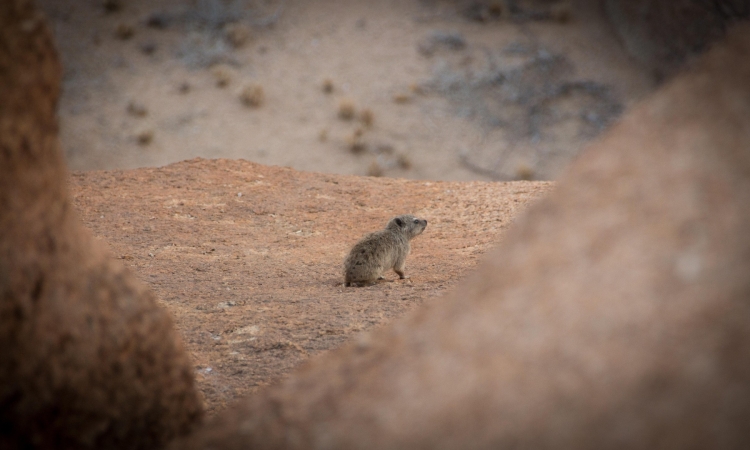
One of the most common animals seen in Spitzkoppe is the dassie, also known as the rock hyrax. These small mammals are often seen moving across the rocks and cliffs. They are quick and alert and live in groups. Black mongooses and slender mongooses are also present and may be spotted moving between rocks or shrubs.
Damara Dik-diks are sometimes seen in the area, although they are shy and not easy to spot. Other small mammals include Western Rock Elephant Shrews, Namaqua Rock Mice, Bushveld Gerbils, and Bush Duikers. These animals are mostly active at cooler times of the day and use the rocks for protection.
Birdlife is one of the highlights of animals & wildlife in Spitzkoppe. The Herero Chat is a well known species linked to rocky desert areas. Rosy faced Lovebirds add bright color to the dry landscape and are often seen flying in pairs or small groups. Other birds that may be seen include the Damara Red billed Thornbill, Sociable Weaver, Stark’s Lark, Booted Eagle, Martial Eagle, Black Eagle, and African Hawk Eagle.
Reptiles are also part of the Spitzkoppe ecosystem. Lizards are common and can often be seen on sun warmed rocks. Snakes are present as well, including the Puff Adder, which can be dangerous. Visitors should always watch where they step and where they place their hands, especially when hiking or climbing.
Plant life supports the wildlife in the area. Welwitschia mirabilis and other succulents grow in the wider region. Lower areas have acacia trees, Shepherd’s trees, and desert shrubs that provide food and shade.
Animals & wildlife in Spitzkoppe show how life survives in a harsh desert setting. Careful observation and respect for nature allow visitors to enjoy this unique wildlife safely.


