
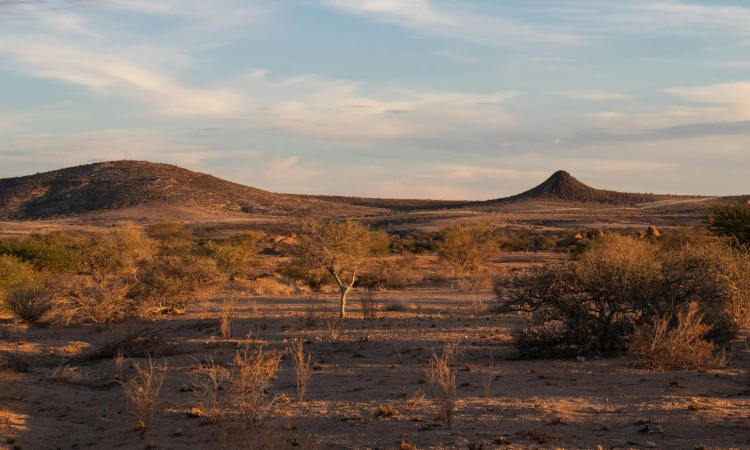
Facts about Spitzkoppe help travelers understand why this place is one of Namibia’s most special desert landmarks. Spitzkoppe is a group of large granite rock formations found in the middle of the Namib Desert, between Swakopmund and Damaraland. Many travelers pass nearby without stopping, but those who visit often say it becomes one of their favorite places in Namibia.
Spitzkoppe is often called the Matterhorn of Africa because of the pointed shape of its main peak. These granite peaks stand alone and rise sharply from the flat desert plains. The color of the rocks changes during the day, from pale tones in the morning to deeper orange shades in the evening. This makes the area popular with photographers and nature lovers.
The Spitzkoppe granite peaks were formed about 130 million years ago. This happened when the supercontinent Gondwanaland began to break apart. Magma pushed toward the surface and later cooled underground. Over time, erosion removed the softer rock, leaving behind the hard granite peaks seen today. Because they rise alone from flat land, these peaks are called inselbergs.
The highest peak is Gross Spitzkoppe, which stands at about 1,728 meters above sea level. Spitzkoppe is located in Namibia’s Erongo Region, between Usakos and Swakopmund. It can be seen from far away and is easy to recognize in the desert.
Spitzkoppe is a well known place for climbing and hiking. There are many sport and traditional climbing routes on the granite walls. Hiking to the rock arch and nearby smaller peaks is also popular and offers wide views of the desert. Camping is allowed inside the reserve, and the campsite is simple. Because space is limited, booking in advance is advised.
Stargazing is another reason people visit Spitzkoppe. The area is far from towns and has very low light pollution. On clear nights, the stars are bright and easy to see.
For the San Bushmen, Spitzkoppe has strong cultural and spiritual meaning. Many rock surfaces contain ancient paintings that show animals, people, and daily life from early communities.
There are also local legends linked to Spitzkoppe, including a story about a soldier who may have climbed the peak before World War I. These stories add to the mystery of the area.
Overall, these facts about Spitzkoppe show why it is an important place for history, nature, culture, and outdoor activities in Namibia.


